
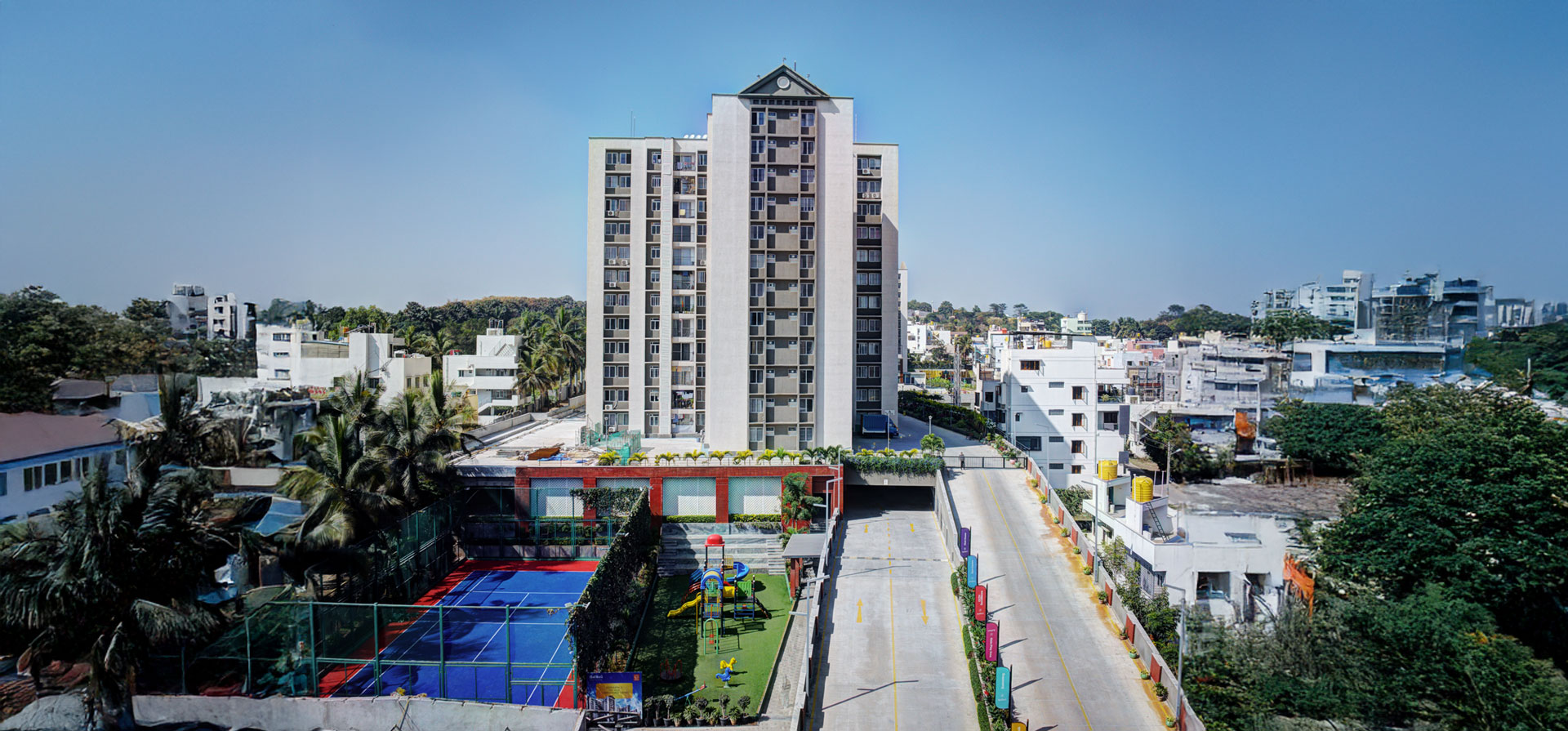
In Bengaluru’s increasingly mature residential landscape, price appreciation is no longer driven by speculation or launch-phase excitement. Instead, it is shaped by visibility of delivery, livability, and long-term usability. Over the past few years, a clear pattern has emerged across the city’s established micro-markets: Ready-to-move-in apartments in Bangalore tend to record sharper, more time-bound appreciation than under-construction assets in comparable locations.
This is not an unusual outcome, nor a post-pandemic distortion. It is a structural shift rooted in buyer behaviour, regulatory discipline, and the city’s end-user-dominated demand profile. Projects such as Gopalan Florenza, which are completed and immediately occupiable, offer a practical lens through which this trend can be understood without the need for promotional framing.
Bangalore is fundamentally an end-user city. Its residential demand is anchored by steady IT and knowledge-sector employment, strong rental absorption, and a population that values certainty over speculation. In this context, completed homes command a premium not because they are new to the market, but because they eliminate multiple layers of risk at once.
A ready-to-move-in home offers clarity on construction quality, legal approvals, community formation, and neighbourhood maturity. Buyers are valuing delivered reality over projected potential. In well-developed pockets of the city, where infrastructure, social amenities, and employment access are already in place, this certainty translates directly into value.
As land availability tightens and new approvals slow in established zones, the supply of completed, unsold inventory becomes structurally limited. When demand enters such an environment, appreciation is not gradual; it is compressed.
Under-construction properties typically follow a long appreciation curve. Price increments are staggered across construction milestones, often stretching over four to six years. While this model suits long-horizon investors, it dilutes short-term visibility.
RTMI homes operate differently. Their appreciation tends to be event-driven rather than timeline-driven. Once a project receives occupancy and begins to absorb residents, the market recalibrates pricing quickly. There are no future milestones left to discount; the asset has crossed its risk threshold.
In Bangalore’s current RERA-governed environment, many buyers actively avoid construction risk altogether. This shifts incremental demand toward completed homes, accelerating price discovery within a shorter window.
One of Bangalore’s defining characteristics is its rental depth. Few Indian cities can match its ability to absorb quality housing across income bands. RTMI homes tap directly into this advantage.
The moment a home is handed over, it becomes income-generating. This rental readiness creates a valuation floor, particularly important for buyers balancing self-use with long-term investment logic. In projects where occupancy builds quickly, market confidence follows.
Completed developments with visible community life, operational amenities, and functioning associations tend to attract a second wave of buyers, those who prefer to enter after the first cycle of uncertainty has passed. This secondary demand often coincides with noticeable appreciation, driven not by speculation but by lived-in validation.
A recurring question among buyers is why price increases in RTMI projects seem sudden. The answer lies in inventory dynamics.
Unlike under-construction launches, where hundreds of units may be released in phases, completed projects typically have limited residual availability. Once a critical mass of homes is sold and occupied, the remaining inventory becomes scarce. Any new demand, whether from end users upgrading or from investors seeking stable yields, competes for a shrinking pool.
In such scenarios, appreciation is not linear. It occurs in steps, often within months, reflecting absorption rather than announcement. This is particularly common in Luxury flats in Bangalore located within mature residential corridors, where new comparable supply is either distant or non-existent.
Positioned as a ready-to-move-in residential development, Gopalan Florenza reflects many of these broader market mechanics. Its price movement over recent months aligns with patterns seen across Bengaluru’s high-demand, completed projects.
The appreciation here is not attributable to a singular trigger. Instead, it mirrors a convergence of factors: immediate possession, livability, rental potential, and location maturity. As buyers experience the project as a functioning residential environment rather than a promise on paper, market perception adjusts accordingly.
Such shifts are common in Bangalore’s established neighbourhoods, where completed homes with clear titles and operational infrastructure are increasingly preferred. In this sense, Gopalan Florenza is not an exception it is a representative outcome of how RTMI assets behave when demand meets limited supply.
The growing preference for ready-to-move-in homes signals a deeper evolution in Bangalore’s residential market. Buyers today prioritise visibility over projection, usage over assumption. In response, appreciation has become more concentrated, more transparent, and more closely tied to real-world performance.
For investors and end-users alike, RTMI homes offer a different kind of stability, one grounded in occupancy, rental viability, and neighbourhood maturity. In high-demand micro-markets, this stability often translates into faster appreciation, not because prices are being pushed up, but because the market is recognising value that is already evident.
As Bangalore continues to consolidate as an end-user-led city, completed residential assets are likely to remain among its most resilient, visibility-driven investment choices.
Within this broader RTMI dynamic, the location context of Gopalan Florenza in Banashankari 6th Stage helps explain why demand-led appreciation tends to surface over shorter periods. Banashankari 6th Stage represents a mature South Bangalore micro-market with established road connectivity, access to daily social infrastructure such as schools, healthcare, and neighbourhood retail, and relatively predictable commute patterns to key employment zones. As a predominantly residential catchment with limited scope for large new supply, buyer preference here is shaped less by future infrastructure speculation and more by immediate livability and long-term residential stability. In such settings, ready-to-move-in homes typically experience sharper price recalibration once occupancy builds, reflecting absorption-driven demand rather than headline-led price movement.