
Bengaluru’s residential landscape has evolved alongside the city’s technology-driven economy. Over the past two decades, the growth of the IT sector has influenced not only where people work but also how professionals choose to live within the city.
Increasingly, the conversation among homebuyers extends beyond location alone. Buyers today evaluate how well a residential neighbourhood supports daily routines, commuting convenience, and overall quality of life.
Within this context, the rise of integrated townships in Bangalore, particularly across established southern neighbourhoods such as Banashankari, Rajarajeshwari Nagar (RR Nagar), and the Mysore Road corridor, reflects a structural shift in how housing demand is forming. For many IT professionals, these locations provide a balance between connectivity, residential maturity, and lifestyle infrastructure.
South Bengaluru has long been recognised as one of the city’s more established residential zones. Areas such as Banashankari and Rajarajeshwari Nagar developed gradually over time, supported by educational institutions, civic infrastructure, and planned residential layouts.
For many professionals working across Bengaluru’s technology ecosystem, including offices located along the Outer Ring Road, Global Village Tech Park, and central business districts, these neighbourhoods offer a relatively balanced commute compared to more congested inner-city zones.
Connectivity through arterial roads such as Mysore Road, NICE Road, and the expanding metro network has further strengthened residential interest in this part of the city.
As a result, apartments in South Bangalore within these mature micro-markets often attract buyers who prioritise long-term habitation rather than short-term investment cycles. The buyer base typically includes technology professionals, mid-career executives, and families relocating within Bengaluru in search of larger homes and quieter residential environments.
This end-user orientation plays a significant role in shaping how housing supply is absorbed.
Residential expectations among Bengaluru’s professional workforce have evolved significantly over the years. Earlier apartment developments largely focused on gated housing clusters with basic amenities.
Today, however, residential communities increasingly function as multi-layered living environments.
Integrated residential layouts often include landscaped open areas, recreational facilities, social gathering spaces, and shared community infrastructure. These developments are designed to support everyday routines ranging from fitness activities and outdoor recreation to informal social interaction.
For IT professionals navigating demanding work schedules, having leisure and relaxation spaces within residential developments contributes to both convenience and overall livability.
Bengaluru’s residential market has historically been shaped more by end users than by speculative investors. A large proportion of buyers in the city are professionals purchasing homes for actual occupancy.
This characteristic influences how residential neighbourhoods evolve. When homes are occupied rather than held purely as investment assets, communities gradually develop around daily life.
Retail services, local commerce, educational institutions, and healthcare facilities tend to strengthen in areas where residents are already established.
Consequently, developments with strong occupancy and active community environments often attract sustained interest from buyers. In southern neighbourhoods such as Banashankari and RR Nagar, this pattern has been visible for several years.
For buyers evaluating flats for sale in South Bangalore, completed residential communities with visible occupancy often provide greater clarity about neighbourhood stability compared to early-stage construction projects.
Another trend shaping buyer behaviour is the growing preference for ready or near-complete residential developments.
Over the past few years, homebuyers have become more attentive to delivery timelines, construction quality, and legal transparency. Completed projects allow buyers to directly evaluate the living environment, ranging from apartment layouts and common areas to the functioning of amenities.
Future-delivery projects, while sometimes priced differently, require buyers to evaluate longer timelines and projected neighbourhood development.
For many technology professionals, the certainty of a completed home combined with the option of immediate occupancy or rental income often outweighs the uncertainty associated with longer construction cycles.
This behavioural shift has gradually strengthened demand for residential assets that are either completed or nearing delivery.
Bengaluru’s technology-driven workforce creates a continuous cycle of residential movement across the city. Professionals relocating between companies or moving closer to workplaces contribute to steady rental demand in well-connected neighbourhoods.
Areas such as Banashankari and Rajarajeshwari Nagar benefit from their proximity to employment hubs, including Tech Park, along with relatively strong connectivity to other parts of the city.
For property owners, this creates a degree of rental visibility. Homes located within established residential environments tend to attract tenants seeking stable neighbourhoods rather than newly developing peripheral locations.
This rental consistency often becomes an additional factor influencing long-term residential demand.
Residential pricing patterns in Bengaluru often follow a gradual trajectory, occasionally followed by sharper adjustments during periods when supply tightens while demand remains active.
In mature residential pockets such as Banashankari and RR Nagar, such movements are typically observed when completed inventory becomes limited while buyer interest continues.
Because many buyers in these areas are end-users who have tracked neighbourhoods over extended periods, purchasing decisions can occur quickly once suitable homes become available.
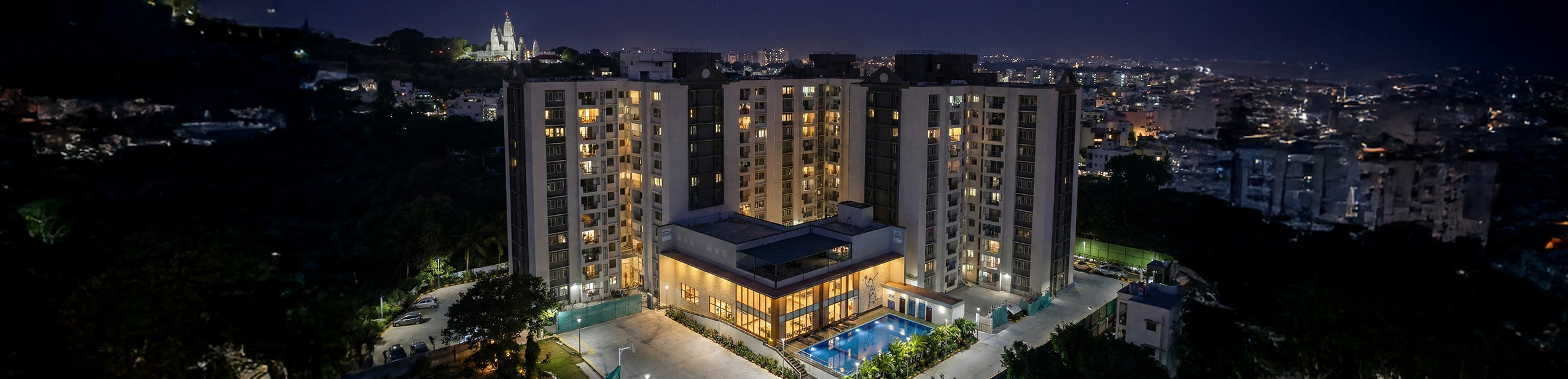
Developments such as Gopalan Florenza, located within this southern residential belt, occasionally appear in market discussions as examples of how demand interacts with available inventory. Observers often note that price adjustments in such projects tend to align with broader neighbourhood patterns, particularly when projects are completed and ready for occupancy.
Rather than reflecting speculative spikes, these movements generally mirror absorption levels, buyer readiness, and the availability of finished homes within established residential zones.
For many IT professionals, residential choices increasingly revolve around achieving a sustainable balance between professional commitments and personal well-being.
Integrated residential environments attempt to support this balance by combining housing with recreational and social infrastructure. Facilities such as landscaped gardens, sports areas, community spaces, and fitness amenities contribute to a more holistic living environment.
Neighbourhoods like Banashankari and Rajarajeshwari Nagar offer an additional advantage in this regard. Their relatively lower density compared to central city zones allows residential communities to incorporate larger open spaces and leisure-oriented amenities.
This blend of accessibility, residential stability, and lifestyle infrastructure continues to influence buyer preferences in the southern parts of the city.
Among India’s major metropolitan housing markets, Bengaluru remains distinctive for its strong end-user orientation. While investors remain present, a significant portion of residential demand is still driven by professionals purchasing homes for personal use.
This pattern has gradually encouraged the development of residential communities that prioritise long-term livability rather than purely speculative demand.
For buyers evaluating apartments in South Bangalore, integrated residential developments provide an environment where work accessibility, community life, and leisure activities can coexist within the same neighbourhood.
As Bengaluru’s technology economy continues to grow, the relationship between work, life, and leisure is likely to remain a defining factor shaping the city’s residential choices.